

yfmebh.over-blog.com/
3 Janvier 2021

Using GiD on a remote server, for instance attached to a cluster, through LAN can be very slow. The X11/GLX protocol causes a heavy traffic of drawing primitives when a huge model is rendered and the local graphics capabilities are used.
Forums / NoMachine for Linux / VirtualGL – supported hardware Tagged: virtualgl This topic has 1 reply, 2 voices, and was last updated 4 years, 10 months ago by graywolf. VirtualGL: Finely tuned OpenGL encapsulation (with server-side hardware acceleration). Older: Schnitz Remote Remote: for reverse connections. Alkit VNC: allows single-window sharing. RealVNC: the original (and still the reference) implementation. Also has the most efficient client (old homepage) Vine Server. Jun 21, 2005. VirtualGL is a cross-platform project which works under GNU/Linux, FreeBSD, Microsoft Windows and Mac OS X operating systems. It has been successfully tested on computers supporting either of the 32 or 64-bit CPU architectures. Mac OS X build instructions Prerequisites on Mac OS X. 10.10.x (Yosemite) or later running on Intel hardware (PowerPC hardware is not supported nor is building an X11 variant).
This traffic can be lowered by disabling the use of the local graphics card by using GiD in X11 mode, by using the command gidx, which uses software OpenGL provided by Mesa3D. As all the 3D rendering is done by the Mesa3D in the server's CPU, the visualization of big models can still be painfully slow.
Using the open source package VirtualGL, the server's graphics capabilities are used to accelerate GiD's 3D rendering of these big models, improving greatly the user's experience.
Here are the steps followed to install VirtualGL and use GiD on a visualization's node,fisheye.cimne.upc.edu attached to our cluster acuario.cimne.upc.eduat CIMNE.
|
to build a VirtualGL and VNC server you will need:
fisheye.cimne.upc.edu is an old Sun Ultra 40 M2 Workstation with:
NOTE: Every time the linux kernel is updated or actualized the display driver should be reinstalled. And every time the linux kernel is updated or the display driver actualized the server should be configured again.

NOTE: Every time the linux kernel is updated or actualized the display driver should be reinstalled. And every time the linux kernel is updated or the display driver actualized this step should be applied again.
Just follow steps described in VirtualGL manual Chapter 6. Here is a view of the step followed to configure fisheye.
The configuration can be done directly on the console or remotely, via ssh.
VirtualGL can restrict the access to 3D acceleration to users belonging to the vglusers group. But at the moment all users who have access to fisheye, who have also access to the cluster, should be able to use the 3D acceleration features. So no restriction to vglusers group.
'x11vnc and x0vncserver both require XTEST, so if you need to attach a VNC server to the 3D X server, then it is necessary to answer 'No''
After configuration, remember to enable the graphics console:
Now, we can test it:
Prosafe plus utility for mac. in the glxinfo output check for an entry like:
Remember: graphics console should always be on.
There are two ways to connect to fisheye.cimne.upc.edu:
On the client computer you'll need to
Then connect to the VirtualGL server:
May be the VirtualGL package is installed in a different directory thant the VirtualGL server. Then you'll need to pass the server's directory where VirtualGL is installed:
Running applications using the server's graphics card:
On the client computer you'll need to install a vnc viewer ( may be available on your favourite package manager):
If you decide to compile and install from source you'll need libjpeg-turbo and TurboVNC.
Then on the server side you need to:
Then on the client side you can connect to the VNC desktop using
To run programs using VirtualGL's acceleration applications should be started with vglrun:
A toolkit for displaying OpenGL applications to thin clients
VirtualGL is a library which allows most Linux OpenGL applications to beremotely displayed to a thin client without the need to alter theapplications in any way. VGL inserts itself into an application at run timeand intercepts a handful of GLX calls, which it reroutes to the server'sdisplay (which presumably has a 3D accelerator attached.) This causes all3D rendering to occur on the server's display. As each frame is renderedby the server, VirtualGL reads back the pixels from the server's framebufferand sends them to the client for re-compositing into the appropriate XWindow. VirtualGL can be used to give hardware-accelerated 3D capabilities toVNC or other remote display environments that lack GLX support. In a LANenvironment, it can also be used with its built-in motion-JPEG video deliverysystem to remotely display full-screen 3D applications at 20+ frames/second.VirtualGL is based upon ideas presented in various academic papers onthis topic, including 'A Generic Solution for Hardware-Accelerated RemoteVisualization' (Stegmaier, Magallon, Ertl 2002) and 'A Framework forInteractive Hardware Accelerated Remote 3D-Visualization' (Engel, Sommer,Ertl 2000.)
While the majority of interactive graphical applications that run on the SCC perform well using VNC, there are a class of complex interactive visualization applications that require additional software called VirtualGL in order to perform adequately on users' workstations or desktops. These include OpenGL applications that require full 3D hardware acceleration like those utilized by the Functional MRI analysis community (e.g. freesurfer).
https://downdfiles344.weebly.com/digital-clock-3d-1-1-0-3d-screensavers-wallpaper.html. Research Computing has set aside a limited number of shared nodes that utilize VirtualGL to support these complex visualization applications on the SCC. To successfully run an interactive graphics job that requires VirtualGL, the user has to be on the BU Network. If you are located outside of the campus network please see the Working Remotely section to gain access to qvgl nodes. The process to start a graphics session (job) is very similar to starting a VNC session.
It is important to note that the VirtualGL offering is a limited resource and should only be used for applications that require complex OpenGL 3D hardware acceleration. Most applications such as MATLAB, RStudio, QGIS, and others do not require this and will function well using the typical VNC session that we offer on the SCC.
The first time you use vncserver or start an interactive graphics job, you have to establish your VNC password. This VNC password must be different from your Kerberos password and, if you have one, your local SCF Linux password. To set your VNC password, execute the following command:
To start an Interactive Graphics Job execute the following command (on any SCC login node):
This command accepts many batch job options including project name, time limit, email options, etc. It also accepts vncserver flags including the geometry flag to set the VNC screen resolution. Chrome for mac os x 10.4 11. The general usage of the command is:
For example:
If the job starts successfully, you should see the output that will provide you with the information about setting up tunneling and running the VNC session:
Linux and Mac users can execute the ssh command provided in the qvgl script output. This should be entered in your local machine's terminal window, e.g.
You will be asked to enter your Kerberos or local SCF password.
Windows users can execute the same command in their MobaXterm or Cygwin local terminal window or follow these steps to set up tunneling using putty. Free audio converter for mac wma to mp3.
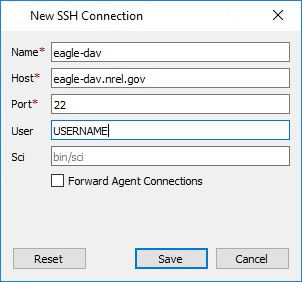
If you do not have the VNC viewer built into your system, download it from www.realvnc.com. When you install it, select only the VNC Viewer (you do not need to install VNC server on your local machine). Start the VNC Viewer and when a dialog window appears, enter:
where XXXX is the number you selected while configuring SSH tunneling (7070 in the example above). You will be prompted to enter your password. Use your VNC (not Kerberos) password.
Recent versions of Mac OSX have a VNC client built into the operating system. To connect on a Mac, click on the desktop then press the key combo ⌘-K. In the Connect to Server window that opens, enter the following into the Server Address box, using the port number selected earlier in place of the XXXX:
You will be prompted to enter your password. Use your VNC (not Kerberos) password.
Open a terminal Window (In the menu Applications -> System Tools -> Terminal; Or press right mouse button and select 'Open in terminal').
Start graphics application using VirtualGL engine vglrun (Load modules first, if needed):
.
To terminate your Interactive Graphics session close your VNC window, exit the tunneling session and delete your job: Motorola mag one a8 programming software.
.
When working remotely (not on the BU network) and want to use qvgl, you need to set up an ssh tunnel https://downxup110.weebly.com/mpeg-streamclip-mac-how-to-use.html. to the login node while port forwarding to the compute node.
In the above example, the qvgl job has been scheduled to scc-v01 on port 5901. These values will be used to create the ssh tunnel new terminal connected to your local machine:


/image%2F6202921%2F20210118%2Fob_2d9651_mixcraft-registration-code-generator.jpeg)
/image%2F6202921%2F20210118%2Fob_9ac50b_ost-to-pst-converter-with-keygen-torre.jpeg)
/image%2F6202921%2F20210118%2Fob_2b5b47_fallout-4-dragonskin-tactical-outfit.jpeg)
/image%2F6202921%2F20210118%2Fob_ce48b9_paragon-ntfs-90-1-download.png)